
Research
KEPLER – INNVA1/2025/48
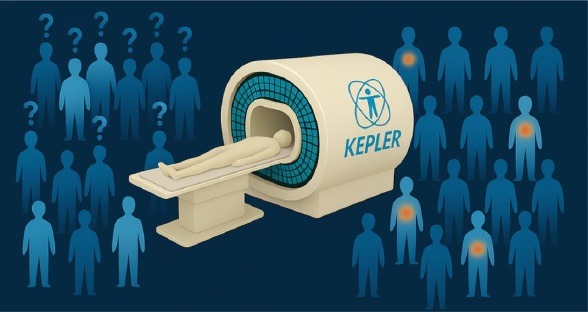
KEPLER is a technology development and transfer project aimed at enabling preventive and early cancer detection through low-field magnetic resonance imaging (MRI). The project builds on a solid track record in accessible MRI technologies and addresses one of the main limitations of conventional MRI systems: their high cost, complexity, and limited suitability for large-scale screening.
The KEPLER approach is based on a compact, cryogen-free MRI system that operates at low magnetic field strength while still providing clinically relevant information. This is achieved through a combination of innovative magnet design, optimized acquisition strategies, and advanced image processing based on artificial intelligence.
A central goal of KEPLER is to shift MRI from a tool primarily used for advanced diagnosis to one that can be realistically deployed in preventive, repeated, and longitudinal clinical workflows, where safety, affordability, and ease of use are essential.
Project Structure
The project is organized into four main work packages, covering the full pathway from system design to clinical validation and transfer.
- System Design and Assembly
This work package focuses on the development and assembly of the physical MRI system, including:
- A compact whole-body permanent magnet architecture
- Gradient and radiofrequency subsystems optimized for low-field operation
- An ergonomic patient support structure designed for accessibility and comfort
- Control Electronics and Imaging Sequences
This phase addresses the electronic control of the system and the implementation of efficient acquisition strategies, including:
- Multi-channel electronic control
- Integration of advanced imaging sequences
- Functional imaging techniques relevant for early cancer detection
- Image Reconstruction and AI-Based Analysis
This work package develops advanced software tools to enhance image quality and diagnostic value:
- Artificial intelligence–based image reconstruction
- Compensation for low-field signal limitations
- Automated tools to assist in the detection of suspicious tissue alterations
- Clinical Validation and Transfer
The final phase focuses on real-world applicability and transfer:
- Safety and compliance testing
- Pilot clinical validation in a hospital environment
- Preparation of technical documentation to support future transfer and exploitation
Team
KEPLER is developed by a multidisciplinary team with expertise in magnetic resonance physics, biomedical engineering, artificial intelligence, and clinical imaging.
The project is led by the MRILab research group at the Institute for Molecular Imaging Instrumentation (i3M), jointly operated by the Spanish National Research Council (CSIC) and the Universitat Politècnica de València (UPV).
The consortium includes:
- CSIC / i3M – Project coordination and core technology development
- Universitat Politècnica de València (UPV) – Co-ownership of results and technical support
- Institute of Biomechanics of Valencia (IBV) – Ergonomics and usability design
- Health Research Institute La Fe (IIS La Fe) – Clinical validation and assessment
Together, the partners cover the full chain from fundamental technology development to clinical evaluation and transfer.
News & Outputs
This section will provide updates on the progress of the KEPLER project, including:
- Project milestones and technical achievements
- Participation in scientific and innovation events
- Public deliverables and dissemination activities
- Publications and presentations derived from the project
As the project advances, selected results and materials will be made publicly available.
Funding Acknowledgement
Project selected and action financed by the European Union through the European Regional Development Fund Program (ERDF) of the Valencian Region 2021-2027.
